

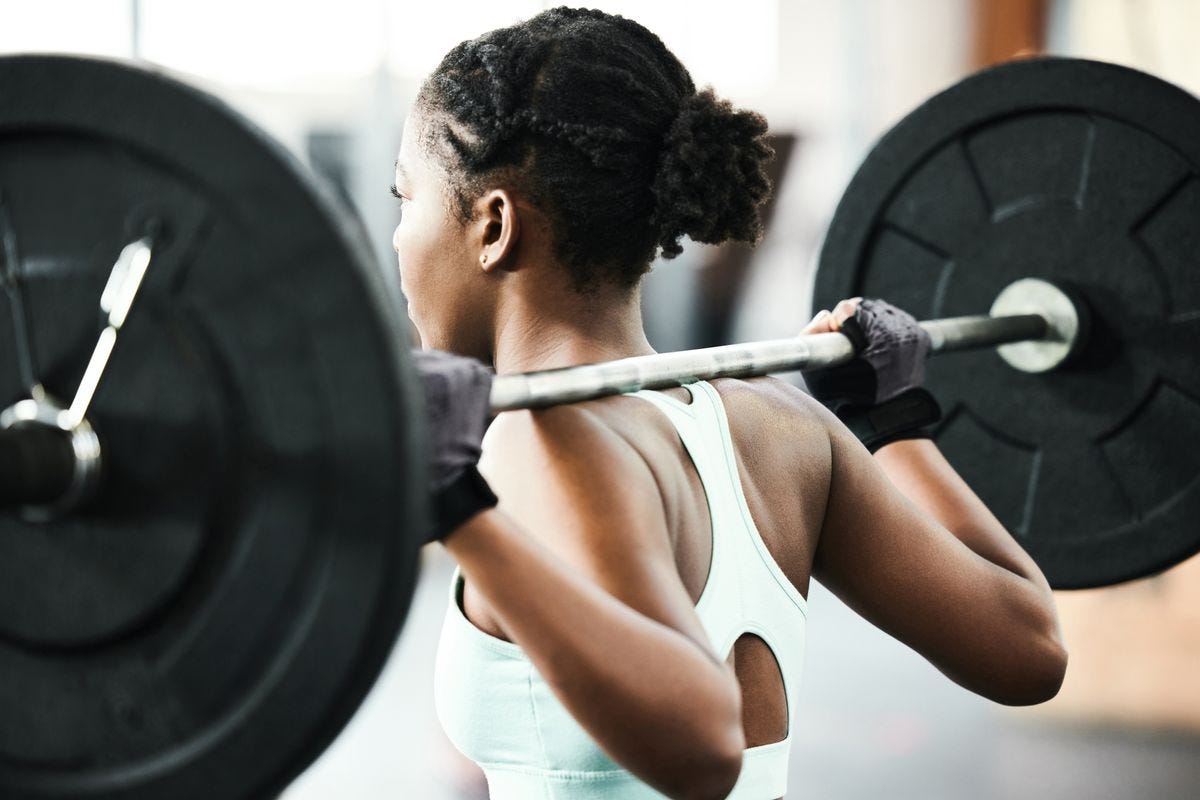
Equally as important as moving around a lot at a slow pace is Primal Blueprint Law 4, lifting heavy things.
Humans are weight-bearing animals. We aren’t as absolutely strong as other animals our size, but we have unique attributes that make us better at lifting than most animals. We have opposable thumbs and highly mobile hip and shoulder joints to allow us to manipulate real-world objects through time and space, defying gravity. We have giant brains that allow us to strategize how to lift objects and coordinate the different joints through complex movements.
Modern life has made lifting an extracurricular activity. No longer do we have to lift and carry haunches of prey for miles to camp if we want to eat. Most of us don’t have to build our own living structures or carry water or physically exert ourselves if we don’t want to. But the physiological requirement for lifting heavy things remains, thus it's addition within the Primal Blueprint Movement. Without it, we simply aren’t very healthy.
Benefits of Lifting Heavy Things
Lifting heavy things makes us stronger. If we’re stronger, we are happier and healthier, and we maintain our ability to function longer as we age. We simply have more options open to us as we interact with the world. We aren’t limited by physical strength, whether it’s playing with our kids, climbing the stairs, or doing anything else requiring our muscles.
Lifting heavy things gives us better balance. The stronger our muscles and the more coordinated they are, the less likely we are to trip and fall. We are better at navigating the environment and maintaining a solid base.
Lifting heavy things gives us stronger, denser, more robust bones, so even though we have better balance and are less likely to fall, if we do fall our bones won’t fracture as easily.
Lifting heavy things also increases organ reserve, meaning we can bounce back from injuries and hospital stays and downtime more easily.
Lifting heavy things builds more muscle, which is metabolically active. The more muscle you have, the more storage you have for glycogen, the more likely you are to be insulin sensitive, and the less likely you are to develop metabolic disease.
In short, the more muscle we have, the better we live. The longer we live. The more capable we are in life. And the better we look, feel, and perform.
It’s important to understand that this is all relative: not everyone is going to end up looking like Schwarzenegger or be able to do a dozen pull-ups in a row. What will happen if you lift heavy things is getting stronger muscles and bones and improving your capacity to enjoy life.
How to Lift Heavy Things
Lift weights for 25-40 minutes, 2-3 times a week. Focus on movements that involve the entire body and in wider ranges of motion—not just on isolating body parts. This can happen in the gym, in your home gym, or outside in nature. The weights you lift can be barbells, kettlebells, machines, or your own bodyweight. Whatever setting you choose, emulate the movements of our ancestors:
Knee flexion: back squats, front squats, lunges, reverse lunges, step ups, skater squats, pistol squats, or hack squats
Hip extension: deadlifts, romanian deadlifts, kettlebell swings, Nordic curls, or glute ham raises
Horizontal pressing: bench press, pushups, or chest press
Overhead pressing: military press, handstand pushup, dumbbell overhead press, kettlebell press, incline press, or decline pushups
Downward pressing: dips, decline bench press, incline pushups, or tricep pulldowns
Horizontal pulls: bent over rows, machine rows, dumbbell rows, or inverted row
Overhead pulls: pullups, lat pulldowns, or assisted pullups
Arms: bicep curls, tricep extensions, or tricep pulldowns
Hit each of these movement patterns at least twice a week for 2-3 sets, making sure you approach failure or at least “feel it.” Your sets should be hard.
This will stimulate your genes to increase muscle strength and power, increase bone density, improve insulin sensitivity, stimulate growth hormone secretion, and consume stored body fat. The biochemical signals created by these very brief but intense muscle contractions generate a slight surge in growth hormone and testosterone and a reduction in myostatin gene expression, prompting an increase in muscle size and power; particularly fast twitch fibers.
Thank you for reading!
Mark’s Daily Apple is still under construction. My team and I are actively working to repost the archives. Check back regularly to find posts that are new to you and revisit old favorites. Looking for a specific post? Let us know here.
You can help more people find us by spreading the word:
And make sure you’re subscribed!
* This blog reflects my personal views and opinions and isn’t intended as medical advice, but I hope it will be informative and inspiring as you pursue a healthy, fulfilling life.