

Most people are at least cursorily familiar with the concept of the circadian rhythm. For those who aren’t, the circadian rhythm refers to our internal, approximately 24-hour cycle of biochemical, physiological, and behavioral processes. Every living thing, from fungus to bacterium to plant to animal, has a circadian rhythm.
External cues called zeitgebers (what a great word, huh?) alter our rhythms, for better or worse. These cues keep us on track or dysregulate our rhythms, depending on the exposure. Powerful zeitgebers for humans include temperature, nutrition, meal timing, social interactions, pharmacological interventions, and, most prominently, the light/dark cycle of the earth.
Yes, light, or the lack thereof, plays an enormous role in the regulation of our behavioral patterns, hormonal fluctuations, and, of particular note, sleep cycles. And for most of human history, “light” (or darkness) always referred to the presence (or absence) of the sun. Depending on the seasons and the weather, you could pretty much count on light, bright days and deep, dark nights.
Nocturnal hunters and scavengers took the lack of light to mean “eatin’ time,” while other animals, including humans, sought shelter and slumber when night fell. Daylight meant activity and safety (since we could, you know, see everything). Once humans harnessed fire, we introduced some light where once there was only darkness, but the more dramatic change occurred with the advent of electric lights. That’s when we could truly banish the darkness—and when it comes to our sleep cycles, it’s been downhill from there.
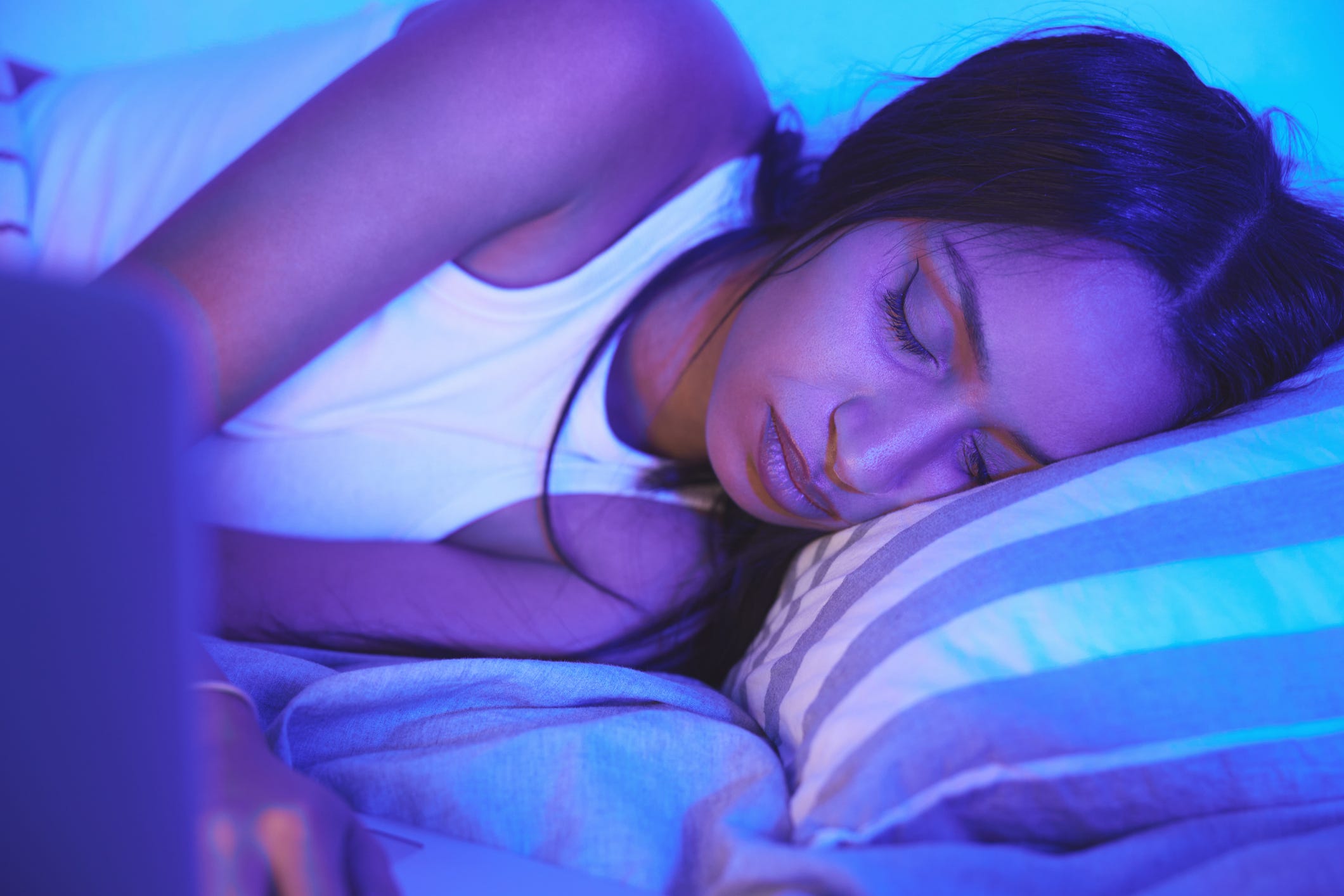
Artificial Light at Night
Before I go on, I need to make something clear. My regular readers will have already grasped this concept, but I think it’s a good idea to reiterate it. Though it’s tempting to place us humans on another plane of existence, apart from the other living creatures that share this planet, we are in fact animals. Sure, we’re smarter and more complex than the others, but we’re still subject to our biology. Our primal ancestors didn’t choose to start sleeping at night because it was too dangerous to be out in the dark any more than bats got together and decided to be nocturnal. Throughout our evolutionary development, handling business during the daytime was simply how we survived.
We can’t escape nature. But boy do we try.
It’s not just natural light that affects our sleep cycle, but also unnatural, manmade lights. Bright, blue light from a 10:00 AM sky. Bright, blue light from your computer screen at midnight. It makes no difference to our circadian rhythms. It’s all the same to our bodies, because for millions of years blue light meant daylight, not a late night blog comment section or “just one more episode” of whatever show you’re currently streaming. And it’s the blue light specifically that appears to monitor our sleep patterns the most.
(Blue) Light and Sleep
Quick science lesson: For years, scientists assumed circadian rhythm was set just by seeing light. Person sees sky or LCD screen, and the same visual system that allows colored vision determines the hormonal, behavioral, or other physical reactions to the light. It makes sense, but that’s not how it works. If a person’s sleep cycle depended purely on traditional color vision, we’d expect the blind to universally suffer from disrupted sleep—but they don’t.
It turns out that there exists a second, more dominant system responsible for setting circadian rhythm based on light input. Certain optical cells express a photopigment called melanopsin. Unlike the standard rod and cone opsins, melanopsin doesn’t help us see. Instead, it reacts most strongly (but not exclusively) to blue light, and scientists think it’s the primary regulator of the biological clock and production of melatonin. In otherwise blind patients with intact melanopsin systems, blue light has a strong effect on their sleep cycles.
Like insulin and inflammation, blue light is integral to our health—in the correct amounts and at the correct times. Exposure to blue light limits the production of melatonin, so we stay alert and awake; that’s what we want during the day. A British study found that blue light-enhanced white lights in the workplace improved alertness, performance, and even nighttime sleep quality in employees. That’s during the day, though, when blue light exposure is normal and expected.1 At night, an absence of blue light allows melatonin production to ramp up so we get sleepy. At least, that’s how it’s supposed to work, if we don’t mess it up (which we do).
This system worked quite well for a long time. Reddish light from fire has little to no effect on melatonin production, so sleep wasn’t disrupted when we relied on fire. These days, though, we’re subject to a steady barrage of blue light from electronic devices well past the time when we should be sleeping.
Limiting blue light exposure to regulate sleep cycles
Nighttime exposure to blue light disrupts our sleep hormones, period. Television, computer screens, even digital clocks with LED displays—they’re all common sources of late night blue light that can affect our production of melatonin.
Is blue light the only issue? No. In one study, researchers found that while monochromatic blue light suppressed melatonin production via melanopsin stimulation, polychromatic white light (which includes blue light) stimulated melanopsin equally while suppressing melatonin to an even greater degree.2 Clearly, it's not just blue light's effect on melanopsin affecting our sleep cycles. Still, blue light is the low-hanging fruit, and there are some simple steps you can take to mitigate its late-night effect on your sleep.
Keep electronics usage to a minimum after dark. (I’d say to stop using electronic devices at dusk, but I know you won’t.)
Enable night mode on any devices that offer it.
Go to sleep earlier.
Use candlelight, or swap out the white lightbulbs in lamps you use in the evening for yellow or orange tinted bulbs.
Keep your room as dark as possible and your sleeping quarters pitch black. Cover any sources of light that you can’t turn off (such as lights on chargers).
Harnessing blue light exposure to regulate sleep cycles
For a long time, folks who were interested in good sleep hygiene focused mostly on what was happening in the evening hours. Now we appreciate just how important morning light exposure is for maintaining a healthy, appropriate circadian rhythms as well. In fact, it’s fair to say that a good night’s sleep starts when you wake up.
Getting natural light in your eyes soon after waking is an essential step in regulating your hormone cycles. Don’t stare into the sun, of course, but do make an effort to get early morning light exposure. Step onto your front stoop and take a few deep breaths. Walk your dog around the block without sunglasses (for you or Fido). Roll out a yoga mat on your patio and do some easy dynamic stretches to wake up your body as well as your mind.
What say you? Have you experimented with light exposure and found that it noticeably affects your sleep? Let the world know in the comments.
References
https://www.ncbi.nlm.nih.gov/pubmed/18815716
https://www.ncbi.nlm.nih.gov/pubmed/18075803
Mark’s Daily Apple is still under construction. My team and I are actively working to repost the archives. Check back regularly to find posts that are new to you and revisit old favorites. Looking for a specific post? Let us know here.
You can help more people find us by spreading the word:

* This blog reflects my personal views and opinions and isn’t intended as medical advice, but I hope it will be informative and inspiring as you pursue a healthy, fulfilling life.