

Grains are fixtures of modern life. Pastrami on rye, spaghetti dinners, corn on the cob, birthday cake, apple pie, endless breadsticks, pizza parties, taco nights.
Studies about "heart-healthy whole grains" in the news. "AHA Approved" icons affixed to any concoction in the grocery store that contains a few grams of wheat—never mind all the sugar and seed oils.
Grains are "staples," bread is the "staff of life," and most people can't imagine a meal without some type of grain on the table.
Yes, grains are solidly etched into our modern Western psyche—just not so much into our physiology. For the vast majority of human evolution, we were hunter-gatherers eating meats, nuts, bitter wild greens, regional veggies, tubers and roots, and fruits and berries. We ate what nature provided. If we ate any grains at all, they were wild and scarce—never staples.
Somewhere along the line, enough of us figured out how to domesticate and proliferate those wild grains. The first large scale grain farming was occurring by around 10,000 years ago. And that's where the trouble started.
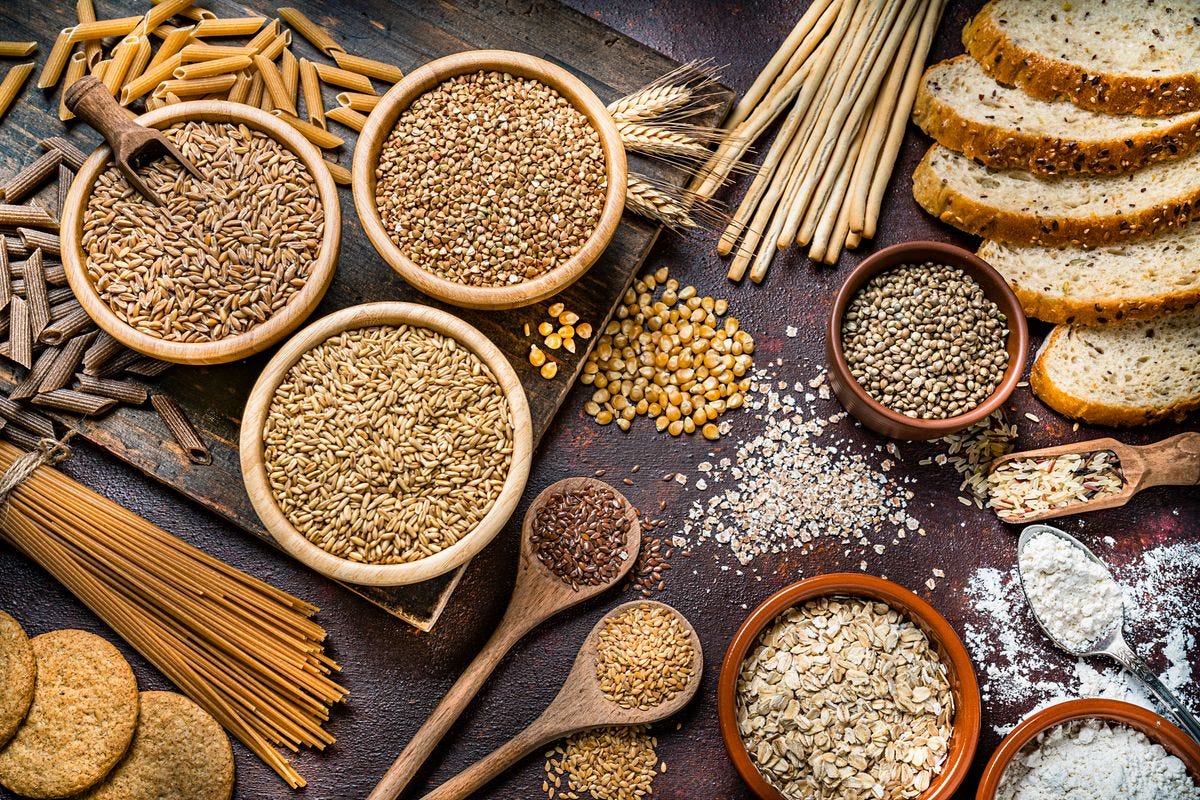
The Agricultural Revolution and Its Effects on Health
Grains are one of the "big three" foods I recommend avoiding (along with industrialized seed oils and added sugars). Why? Because once grains became a big part of a given human population's diet, human health suffered:
People got smaller and weaker.
Their teeth were worse.
They died earlier.
The only thing that improved was their ability to reproduce. Grains meant a steady source of calories and facilitated population growth. The individual agriculturalist may have been weaker and more unhealthy than an individual forager, but the former were more numerous and more successful. They grew and pushed the foragers aside.
Most people reading this today carry an amalgam of farmer, forager, and pastoralist DNA. That means your ancestors had varying levels of grain-eating in their past. That's not what I'm talking about when I say that grains aren't Primal.
When I say humans didn't evolve eating grains, I mean our digestive processes didn't evolve to maximize the effectiveness of grain consumption. You can probably tolerate grains to a certain degree thanks to having at least some farmer ancestry. That doesn't mean your body was designed for them or that they're required—or even helpful—for achieving optimal health.
The goal isn't to eat foods that allow you to hobble along. We're talking about prioritizing the foods that offer effective and efficient digestion and nutrient absorption in the body.
What's Wrong With Grains?
Think about the non-grain foods you eat on a regular basis. Think how easy they are to prepare.
Meat and seafood: You can eat it raw or grill it over a fire. You'll digest it great either way and incorporate all the nutrients it contains.
Dairy: As long as you're able to handle the lactose and your immune system is intact and prepared to face casein and whey without acting up, you can drink a tall glass of raw milk and have no issues whatsoever.
Fruit: It's made to be eaten. It wants to be eaten.
Vegetables: Many of them are best digested after some boiling, steaming, or sautéing, but you can get away with eating most of them raw.
Tubers? Boil, mash 'em, stick 'em in a stew. Easy.
Now consider the unadorned, unaltered, unprocessed grain. Is it easy to eat? Is it easy to render edible? Do you have to do a bunch of weird stuff to it before it's nutritious? You know the answers.
What's my point? The foods to which we are best adapted are those that we can consume with minimal processing.
If you can eat a food raw or after a little bit of cooking, digest it, and assimilate the majority of its micronutrients, it's probably something the human digestive system is suited to eat.
If a food takes a ton of extra processing, if you have to perform some complicated ritual just to make it edible and the nutrients available, it might not be the best thing to have as a staple food—just as heuristic.
The Nutritional Value of Grains
Grains often look good "on paper." They contain high levels of vitamins and minerals, but can you actually absorb all those nutrients when you eat the grain?
Not always.
Let's take niacin, a very important B-vitamin for growth and development and energy generation. Without enough niacin, rats (and children) suffer from stunted growth.
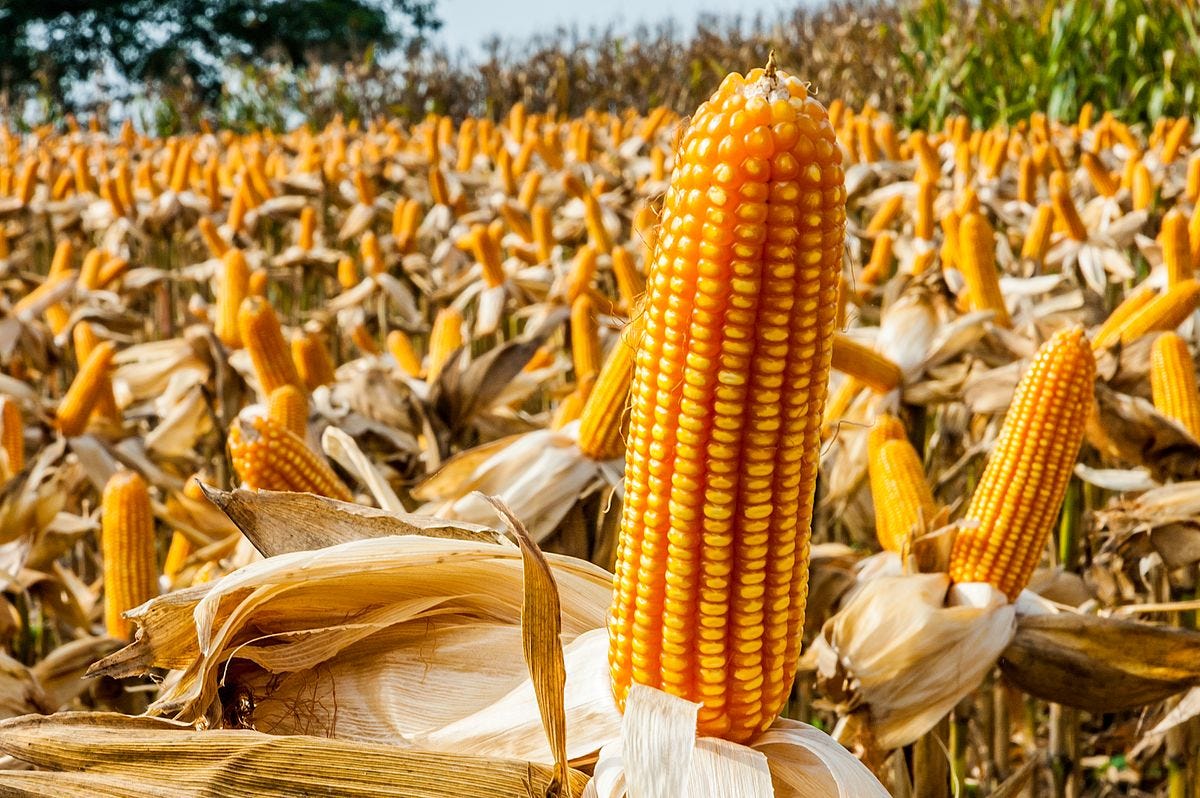
Feeding young rats whole corn (yes, it's a grain) stunts their growth, even though corn is "astronomically rich" in niacin. The problem is niacin in corn is "bound" niacin, meaning it's unavailable for absorption unless you take certain precautions in its preparation. In the Americas, native groups who lived off corn figured out you had to treat it with alkali to make it suitable for a staple food. In North America, alkaline wood ash was added to corn. In South and Central America, calcium carbonate (lime) was added. Both methods release the bound niacin in a process called nixtamalization.1
Meanwhile, when corn was introduced to Europe and large groups of peasants began living off it, pellagra—clinical niacin deficiency—swept the land. They were just cooking the corn straight up; they had no idea you were supposed to perform an alkaline treatment first to make the niacin available.
This goes for a lot of the nutrients in other grains, too. The niacin in wheat is bound, too, and needs to be fermented and sprouted or treated with alkali, for example.
There's also phytic acid, the storage form of phosphorus that binds to many vital minerals. When phytic acid binds to the magnesium, calcium, and zinc in a given grain, you absorb much less than you'd think by looking at the nutrition facts. In high enough doses, phytic acid can even pull minerals from your teeth and bones. Populations that rely on high-phytic-acid grains as staple foods have been shown to run into mineral deficiency issues.2
Processes like nixtamalization, extended fermentation, and sprouting can liberate many of the bound vitamins and minerals.
Gluten Intolerance and Sensitivity
Gluten, found in wheat, rye, and barley, is a composite of the proteins gliadin and glutenin. Around 1 percent of the population have celiac disease. These individuals are completely and utterly intolerant of any gluten. For them, any gluten in the diet can be disastrous.3 We’re talking compromised calcium and vitamin D3 levels, hyperparathyroidism, bone defects. Really terrible stuff.
But that's only the tip of the iceberg. Just because you’re not celiac doesn’t mean you aren’t susceptible to the ravages of gluten. Gluten sensitivity is real. It exists as a clinical entity apart from full-on celiac disease.4 Researchers now believe that a third of us are likely gluten intolerant or sensitive. (And that doesn't mean that the rest of us aren't experiencing some milder negative effects.)
Folks who are gluten sensitive or intolerant "react" to gluten with a perceptible inflammatory response. Over time, those who are gluten intolerant can develop a dismal array of medical conditions: dermatitis, joint pain, reproductive problems, acid reflux and other digestive conditions, autoimmune disorders. Schizophrenics are more likely to show evidence of anti-gluten antibodies, and when you remove gluten from their diets, their symptoms are more likely to improve.5
Excessive, Unnecessary Carbohydrates and Glucose
Grains also represent a huge load of carbohydrate. Most people living modern lives, working at a desk, training a few times a week, and walking a bunch simply don't need heavy boluses of carbohydrate. If they're trying to become fat-adapted or adopt a ketogenic lifestyle, eating enormous quantities of grains will directly inhibit that process.
Besides, if you want to eat carbs, there are safer, better, more congruent sources like potatoes, sweet potatoes (purple and Japanese sweet potatoes being the clearly superior varieties), winter squash, turnips, rutabagas, and fruit of all kinds. If you absolutely insist on grains, white rice and fresh corn on the cob are the best choices. White rice is fairly neutral and benign, while fresh corn on the cob is much higher in unbound/free niacin than mature "grain" corn.
The "Benefits" of Whole Grains
Okay, but aren’t grains the staff of life? Don’t they represent the staple foods for populations all over the world? Aren’t there tons of studies showing the benefits of “heart healthy whole grains?”
I could make a listicle of all the various grains describing their composition and providing links to all the "health benefit" studies the industry has run. If you were to just glance at titles or even the abstracts, grains would come out looking great.
But the reality is that every single grain study I've ever read compares people eating whole grains to people eating refined grains. The control group is the refined grain group. That actually makes sense when you're considering the general grain-eating population of an industrialized nation. It doesn't, however, tell us anything about people who avoid grains—both whole and refined—in favor of meat, fruit, vegetables, roots, dairy, and tubers. People like you and me.
They never compare grains (refined and whole alike) to no grains at all.
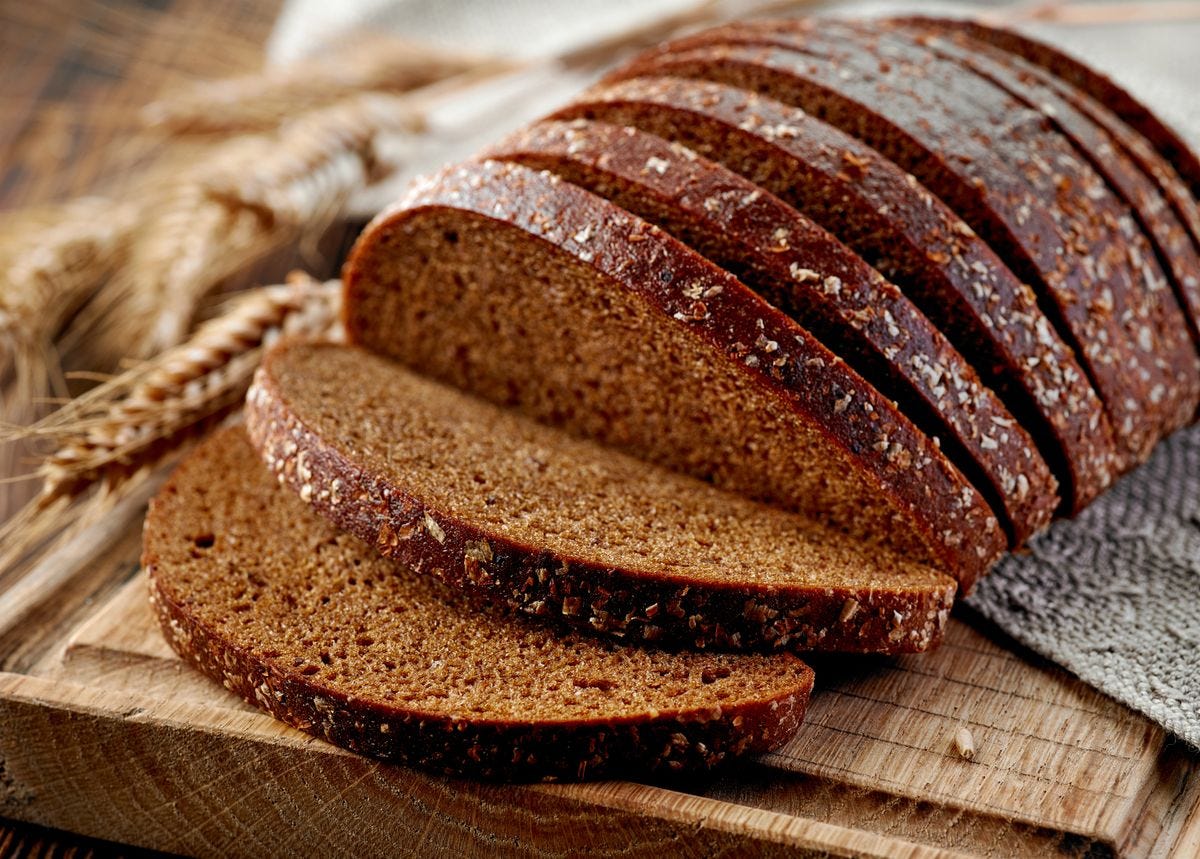
Here, I'll show you:
Take rye.
According to one study, you get "increased plasma brain-derived neurotrophic factor 10.5 hours after intake of whole-grain rye-based products."6 Healthy adults ate some whole meal rye bread and then 10-and-a-half hours later showed evidence of increased BDNF, which increases neuroplasticity and suppresses brain inflammation. Sounds incredible! But they were compared to healthy adults eating the same number of calories in white bread.
Or you've got this study, which shows a positive "impact of rye-based evening meals on cognitive function, mood, and cardiometabolic risk factors."7 Again, just reading the result briefly makes rye sound great, but then you realize they were comparing whole grain rye to white bread. What if there was a group eating meat, sweet potatoes, and berries?
Take wheat.
Whole wheat improves the gut biome, and these changes suggest an improvement in liver fat levels.8 But only compared to refined wheat.
Ok, so what about the oft-reported link between overall whole grain intake and better health? Isn't that causative?
When you dig into these studies, you find that whole grain intake is simply a marker for a better overall diet.9
Whole grains enjoy the allure of being healthy, so people who do other healthy things will also eat whole grains. This is the healthy user effect.
The best part is when researchers misinterpret their own studies. This one found that ancient wheat reduced a range of biomarkers, including sodium, potassium, magnesium, folate, iron, and HDL cholesterol. It also reduced creatinine, LDL, and ferritin. These changes were evidence, according to the authors, of "beneficial effects deriving from a diet of ancient wheatmeal..."10 Lower HDL, reduced magnesium, and lower folate status don't sound all that great to me.
The same thing happens with every whole grain study I've ever seen: it ends up being a comparison between whole and refined grains.
There's Nothing Special About Grains
This is really the crux of the matter. Yes, grains contain some nutrients, but why not get the same nutrients from sources that don't come back and bite you in the backside? Whatever nutrients you can get from whole grains you can get in equal or greater amounts in other food. In terms of nutrient density, grains can't hold a candle to a diverse diet of veggies and meats. (And if the label says otherwise, look closely because the product is fortified. Save your money and buy more meat instead.)
Let's use oats as an example.
Oats contain a specific type of soluble fiber called beta-glucan that increases bile acid excretion. As bile acid is excreted, so too is any serum cholesterol that’s bound up in the bile.11 The effect is a potential reduction in serum cholesterol. Now, let's assume you want to lower your cholesterol using beta-glucan fiber. Are oats the only place to get it?
No. Mushrooms are also a great source of beta-glucan fibers, and research shows that eating beta-glucan-rich mushrooms can improve LDL oxidative stability and reduce oxidative stress in people with high cholesterol.12 Mushroom-borne beta-glucan may also lower lipids.13
Oat bran has been said to be uniquely protective against atherosclerosis in rats (and presumably humans) with a genetic defect that slows their ability to clear LDL from the blood.14 Of course, the very same type of LDL-receptor-defective mice get similar protection from a diet high in yellow and green vegetables, so it’s not as if oat bran is a magical substance.15 Other types of fiber can also do it.
Like other prebiotic fibers, oat bran also increases butyrate production (in pigs, at least16). Butyrate is a beneficial short-chain fatty acid produced when gut flora ferment fibers, leading to a host of nice effects. We have plenty of non-grain fiber sources that increase butyrate production, like resistant starch in potato starch or green bananas.
Overall, I think these studies show that soluble fiber that comes in food form is a good thing to have, but I’m not sure they show that said fiber needs to come from oats or whole grains in general.
The fiber in grains isn't special. The nutrients in grains—if you can even access them—aren't special.
Why not just follow a healthy Primal eating plan? After all, we have studies comparing Primal/paleolithic-style grain-free diets to normal diets containing grains. The paleo diet wins every time, leading to more weight loss, more waist circumference loss, more fat loss.17 That's about as close as you'll get to a grain-containing versus grain-free diet study.
Do You Still Want to Eat Grains?
I'm not telling you you CAN'T eat grains. I'm just saying there's nothing special or necessary about them. And although I choose to steer clear of grains as a regular part of my diet and feel better for doing so, I do occasionally indulge a bit. A tiny bit. And that's where the Primal Blueprint enters: it's about informed, not dictated choices.
That French bread at an anniversary dinner, few bites of the great birthday cake your friend made for you, the saffron rice your daughter cooks for you when you visit her first apartment—they're thoughtful, purposeful compromises. And they're perhaps very worth it for reasons that have nothing to do with the food itself.
The point of the Primal Blueprint if this: When you understand the metabolic effects of eating grains, you're empowered to make informed decisions about the role grains will have in your diet.
Prepare Your Grains Like Your Great-Great-Grandmother Did
If you are going to eat grains on a regular basis, you'd better be eating them traditionally prepared:
Sourdoughs
Alkaline processed corn
Fermented porridges
Sprouting
Soaking
Because these weren't just preparation methods that made grains taste good. They weren't just fun to do. They were necessary to make the nutrients bioavailable and the grains themselves digestible.
Thanks for reading, everyone.
*Post updated 4/5/2022
References
Mark’s Daily Apple is still under construction. My team and I are actively working to repost the archives. Check back regularly to find posts that are new to you and revisit old favorites. Looking for a specific post? Let us know here.
You can help more people find us by spreading the word:

* This blog reflects my personal views and opinions and isn’t intended as medical advice, but I hope it will be informative and inspiring as you pursue a healthy, fulfilling life.